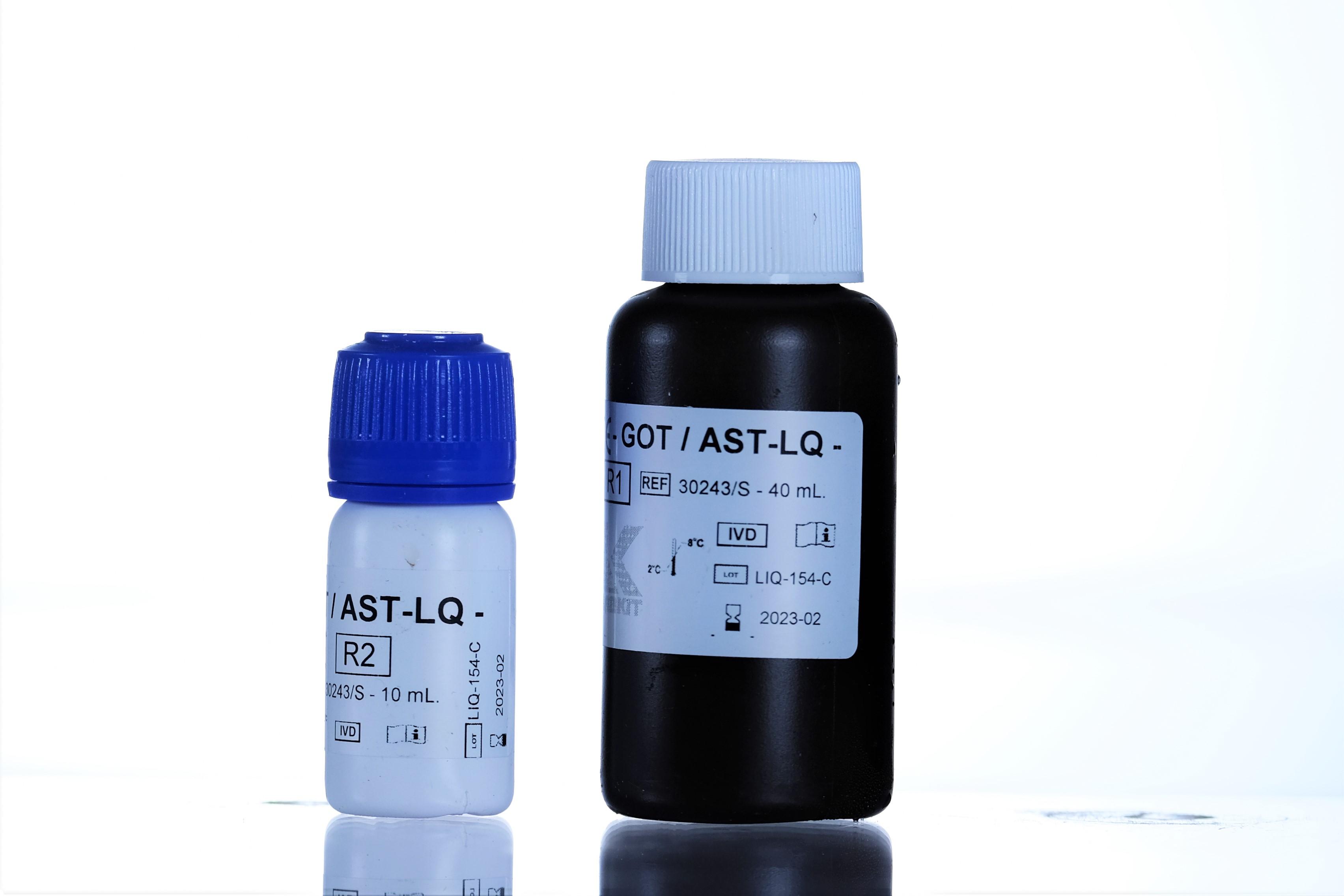
ALT - (Alanine Aminotransferase)
IFCC | Kinetic UV
| REF | Volume |
|---|---|
| N/A | N/A |
Product description:
Alanine aminotransferase is an enzyme produced mainly in the liver and much smaller amounts in
the kidneys, heart, muscles, and pancreas. When serum activity is measured, it provides a marker
of hepatic disease. It is also called alanine aminotransferase (ALAT) and was formerly called
serum glutamate-pyruvate transaminase or serum glutamic-pyruvic transaminase (SGPT). The enzyme
is primarily cytosolic, with an isoenzyme (ALT2) also found in mitochondria, and is
predominantly found in the periportal zone of the liver with a hepatocyte concentration up to
10,000 times that found in serum/plasma. It has a primary role in gluconeogenesis and amino acid
metabolism.
ALT concentration is increased when hepatic cells are damaged (liver cell necrosis or injury of
any cause). Indeed, viral and toxic hepatitis induce a marked elevation of ALT activity in
serum. Intake of alcohol, delirium tremens, and administration of various drug induce slight or
moderate elevation of ALT. ALT concentration in serum is also slightly increased in various
conditions such as: muscular dystrophy, haemolytic disease, myocardial infarction. The magnitude
of serum activity elevation is proportional to the number of affected hepatocytes, and marked
increases will reflect irreversible cell damage and necrosis, while mild increases may indicate
mostly membrane blebbing and reversible cell damage.
ALT is more liver specific than AST. Measurement of both AST and ALT has some value in
distinguishing hepatitis from other parenchymal lesions. ALT is also measured in conjunction
with AST as an aid in the diagnosis of myocardial infarctions, since the value of the ALT stays
within the normal limits in the presence of elevated levels of AST.
